Showing posts with label windows 7 data recovery. Show all posts

Friday, November 26, 2010

Upgrading from Windows XP to Windows 7

Introduction

To upgrade your PC from Windows XP to Windows 7, you'll need to select the Custom option during Windows 7 installation. A custom installation doesn't preserve your programs, files, or settings. It's sometimes called a "clean" installation for that reason.

A custom installation is more complex, and it can sometimes take a couple of hours to complete. We created this five-step tutorial to help guide you through the entire process each step of the way.

What you need

  • An external hard disk. You'll need to move your files off of your PC before you install Windows 7. To make this easier, we recommend a free download called Windows Easy Transfer, which will require an external hard disk. They're readily available at electronics and office supply stores, and they provide an easy way to add additional storage space to your computer.

  • The original installation discs or setup files for the programs that you want to use with Windows 7. You'll need to reinstall your programs by hand after installing Windows 7. When you run Windows Easy Transfer you will get a report that lists the programs that you are currently using with Windows XP.

32-bit or 64-bit: Which version of Windows 7 to install?

Both 32-bit and 64-bit installation discs are included in the Windows 7 package. 64-bit operating systems can handle large amounts of memory—typically 4 gigabytes (GB) of random access memory (RAM) or more—more efficiently than 32-bit operating systems. However, not all computers are 64-bit capable. For more information, see 32-bit and 64-bit Windows: frequently asked questions and 32-bit and 64-bit Windows 7.

You'll probably need the 32-bit version, but to make sure, click Start, right-click My Computer, and then click Properties.

  • If you don't see "x64 Edition" listed, then you're running the 32-bit version of Windows XP. Step 1 of this tutorial will show you how to run the Windows 7 Upgrade Advisor, which can let you know if your computer is capable of running the 64-bit version of Windows 7.

  • If "x64 Edition" is listed under System, you're running the 64-bit version of Windows XP and can run the 64-bit version of Windows 7.

Next: Download and run the Windows 7 Upgrade Advisor.

For more details Click here

windows 7 data recovery

Wednesday, June 23, 2010

Tech Talk on Windows 7 Operating System?

According to a survey , Windows 7 has been found the world's most popular operating system now a days. Windows 7 will carry on the substantial improvements that the Microsoft has done in improving Windows Vista: Windows 7 has been developed to be compatible with the latest hardware, software and device drivers for Windows Vista today.

Windows 7 features improved navigation, a fresh taskbar and simplified user interface for common tasks performed in Windows will make it easier and faster. You are able to share data with all computers and devices on your local network or at work. With Windows 7 + Windows Live, you can stay connected with people you care about, and Internet Explorer 8 gives a faster, safer, more productive Web experience.

Along with new features including gestures Touch and Device Stage, Windows 7 lets you make more of their devices, including the ones you use most frequently, such as digital cameras, cell phones and printers. Windows 7 makes it easier to use networked media devices to play music, watch videos and photos to show are on your Windows PC.

Not only this, Windows 7 also offers more options than ever to customize and personalize your Windows PC with styles that match your personality.

Here are some of the enhanced features of Windows 7

Desktop: With Windows 7, its impressive work at the desk. There are new features called Shake Aero, Aero Peek and Snap. You can try to show the desktop of the new slide, which shows a series of rotation image. The taskbar play a vital role in any OS, so Microsoft has completely changed the taskbar to help you work more intelligent, cutting clutter, and do more things. Now you can stick your gadgets anywhere on your desktop that is not possible in Windows Vista.

Lace: A new feature that lets you resize the windows open in a new way, by dragging the edges of the screen.

Jump List: You can access your frequently used programs, songs, pictures and documents. Thanks to this great feature. To open a Jump List, just click a program icon in the Windows taskbar 7. What the disclosure in a Jump List depends entirely on the program. The list Skip to IE displays websites frequently seen. You can quickly access to commands for things like compose new email messages or play music.

HomeGroup: Now it's easy to share files and printers a home network through this function. Connecting two or more PCs with Windows 7, and automatically HomeGroup start sharing your music, pictures, video and document libraries with other networked users. HomeGroup is also safe, which lets you give the password to the files and shared folders. This feature is available with all versions of Windows 7.

Browser window: In Windows 7, the search is quicker and easier. You just type in the box Search the Start menu and you will have a list of relevant documents, pictures and etc. Besides that they also can search any external storage device.

Well, I'll tell you something. If you like Windows Vista, without a doubt that you love Windows 7 because it is a better version of that operating system principles. Microsoft Redesigned virtually everything about Vista and made changes large and small across the board.

resource: http://www.graftonfallsnews.com/microsoft-winxp/

Windows 7 Recovery | Windows 7 Data Recovery

Tuesday, March 30, 2010

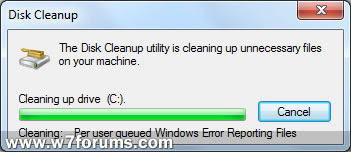
Windows 7 Disk Clean up tool

Windows 7 provides a file cleanup tool which removes unwanted data from you PC . It avails you the space being used by unnecessary temporary files. Lets discuss how to use this Windows 7 tool.

Step 1.
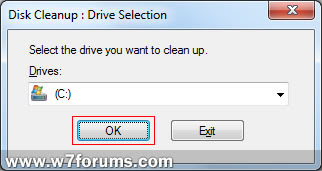
Run cleanmgr.exe or type "Disk Cleanup" in to the start menu search and run that. Select the drive you want to run this application upon and click OK:


Step 2:
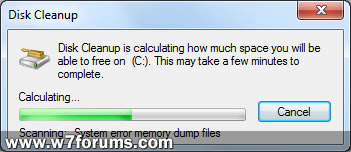
A scan will then take place for a few moments:


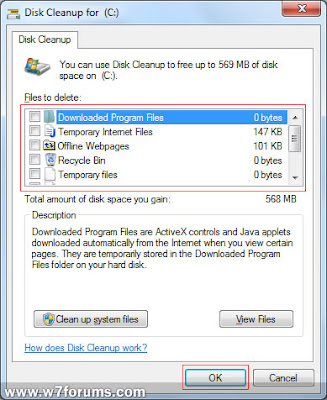
Now select the file types you want to delete by checking the boxes and click OK.

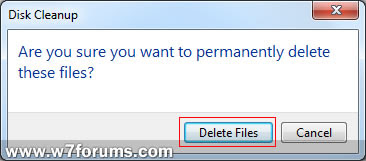
Click "delete files" in the confirmation window if you are sure that you wish to remove them:


A progress bar will then appear while the files are removed, after this, you have re-gained some extra disk space:

Windows data recovery

Monday, March 22, 2010

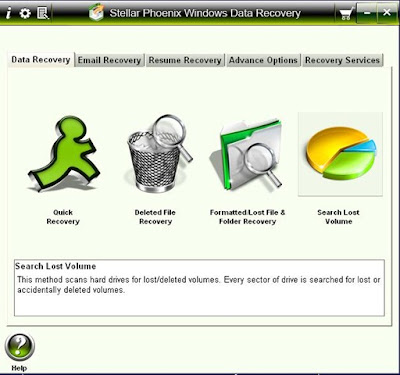
Data recovery software for Windows 7


Windows 7 has bought with itself a strong partition and data management system. Creating, deleting and maintaining partitions is now a piece of cake even for a newbie. Once the partitions are created you can even extend or shrink them anytime you want.


Read more..........

Friday, March 5, 2010

Windows Phone 7 Not Compatible With Windows Phone 6.5


On 4 March 2010 , Microsoft announces that Windows Phone 7 will not be compatible with Windows Mobile 6.5. I was already a matter of discussion but this time Microsoft itself cleared the doubt.

It has also been announced that the development for Windows Phone 7 will be based on five elements:

1..NET

2.Silverlight

3.XNA platform

4.Microsoft's developer tools

5.Web 2.0 standards

There is nothing to worry about for existing consumers Windows mobile 6.5 because the Microsoft will continue to work with its partners to deliver new devices based on Windows Mobile 6.5 and will support those products for many years to come.

Courtesy: http://www.pcmag.com/article2/0,2817,2360964,00.asp


For Windows 7 data recovery software visit : http://www.windows-data-recovery.net/

Monday, February 22, 2010

Windows 7 features updates


Windows PowerShell, Microsoft’s Windows command-line shell and scripting language, has been improved in Windows 7 with the inclusion of PowerShell 2.0.

Over a hundred new cmdlets have been added.

Cmdlets are Microsoft’s simple command tools which allow IT to manage enterprise computers from the command line.

Remote management; a graphical interface; background jobs; debugging; modules; transactions; events; advanced functions, which now behave like cmdlets and are no longer written in C#; multiple language support; and help have all been improved, or added.


Please click here for more...